Advocating for Renters
Attorney Jamie Johnson launched the Memphis Public Interest Law Center and Housing Justice Project to defend renters and push for stronger housing security.
For over 50 years, the Community Foundation has helped people give with purpose, strengthening Memphis and the Mid-South.
We make giving easier and more impactful by matching your generosity with the causes and community you care about most.
We offer solutions and resources to donors and the professionals who advise them to help you give smarter and do more good.
We offer funding opportunities that helps nonprofits and students create positive change and build futures.
When you get involved with the Community Foundation, you join a group of people committed to Memphis’s future.
Learn more about the philanthropic hub that connects capital with the solutions that make our community thrive.
Attorney Jamie Johnson launched the Memphis Public Interest Law Center and Housing Justice Project to defend renters and push for stronger housing security.
It had always bugged Jamie Johnson in her work as an attorney and public advocate: Why did she hear so much about renters’ problems in Memphis? Johnson wondered how she could use her skills as an attorney—and her ability to gather renters’ stories and information—to make lasting change in a system that’s built to work against renters and for landlords.
“I kept thinking: Surely there’s information about what we’re not doing or what the gaps are, and there never was,” Johnson said. “I knew there was something going on, but I couldn’t find any data and nobody would talk to me.
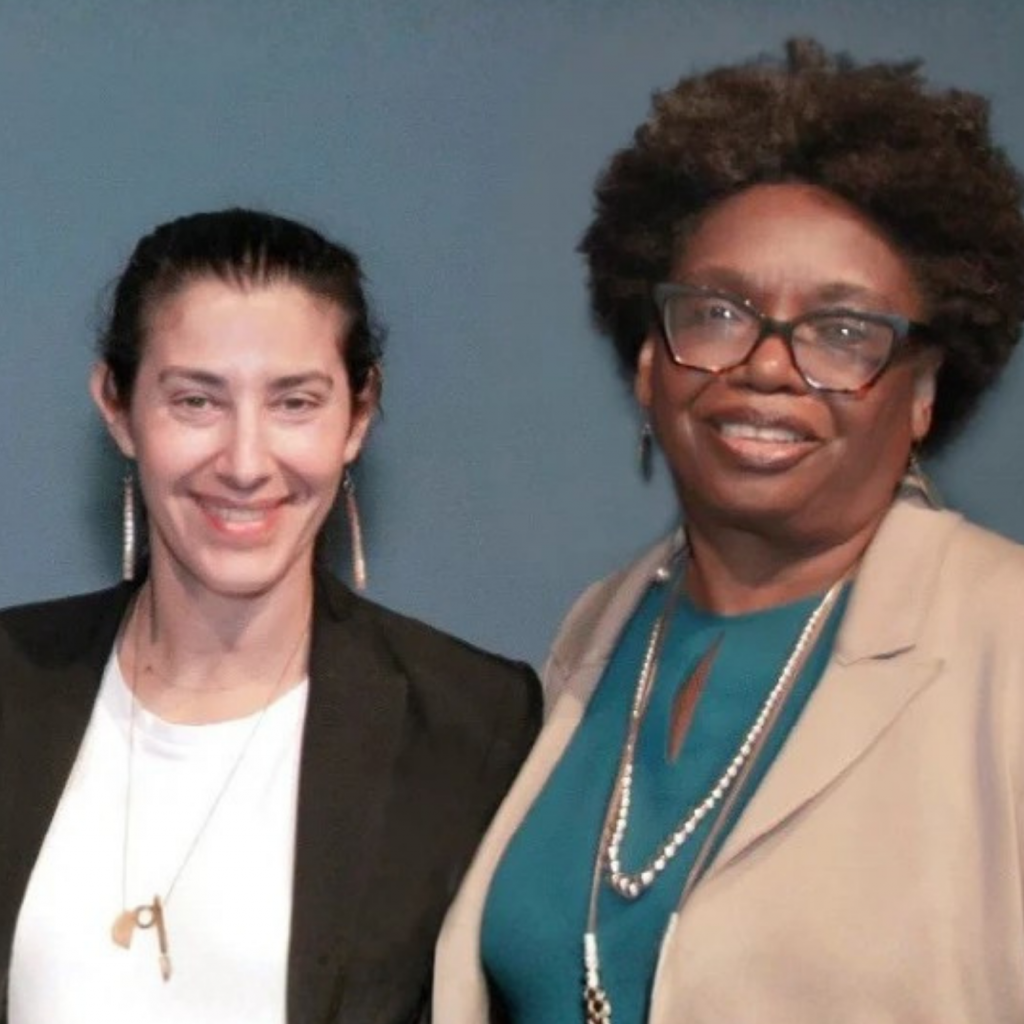
So, she decided to start gathering data herself and working to help renters understand their rights. In 2020 (during the worst of the pandemic) she launched a nonprofit, Memphis Public Interest Law Center, where renters with issues could find information and resources, including legal help. While in law school in Portland, Johnson had worked on a renter’s rights hotline; she knew the power of giving people a number to call to get answers and help, so she launched a Renter’s Rights Hotline. “Then it all just started happening,” she said.
At the end of 2021, Johnson connected with Shirley Bondon, Executive Director of the Black Clergy Collaborative of Memphis, an organization of Black churches working together for social justice.
In 2024, Jamie and Shirley’s project became one of three grantees in the Community Foundation of Greater Memphis’s new multi-year, unrestricted program, Reforming the Housing and Justice Systems.
“The Community Initiatives Committee was moved by the depth of Jamie and Shirley’s desire to make systemic change for renters, as well as by their ability to collect data, tell stories, and raise awareness of the ways the system works against them,” said Sutton Mora, Executive Vice President and COO of the Community Foundation. “Our hope is that they can change attitudes, practices, and structural barriers that are impediments to housing security for Memphians.”
The hotline took off, said Johnson, beginning at a couple hundred calls per year; she estimates they will have handled a couple thousand calls by mid-2025.
“The hotline is our biggest intake point,” she said, and she takes tracking that data very seriously.
“I noticed we were getting a lot of calls about substandard housing, and the level of unlawfulness in those extreme conditions was jarring to me,” she said.
Take Cheryl, one of Johnson’s clients, a jewelry business owner who’d lived in her Memphis rental house for 10 years. Cheryl watched problems—from mold to rodents to a failing hot water heater—get worse and worse. The landlord sent maintenance workers who didn’t fix the problems, then stopped responding. Finally, Cheryl called Code Enforcement, who condemned the house and forced Cheryl to move out in 10 days, a devastating blow. “I lost my purpose, my place,” she said. “You are supposed to be able to live in a home that is habitable. You shouldn’t be rained on, you shouldn’t smell mold in your furniture. You shouldn’t have to get sick.”
Johnson points out that fewer than half of hotline callers are low-income, based on the data the organization collects. “To me, that’s significant,” she said. “Obviously, if you’re affluent, you’re kind of in a bubble, but we hear from a lot of people in that big middle.”
Johnson also estimates that “at least 80 percent of our calls involve unlawful conduct on the part of landlords.”
Despite that, Johnson generally discourages callers from going to court, preferring to help them focus on fixing their issues another way. “Our system’s really broken.”
Excerpted from the 2025 Community Foundation of Greater Memphis Annual Report.

The annual UT Health Science Center-hosted event is made possible by the Frank M. Norfleet Forum for the Advancement of Health Fund.
GiVErs who volunteered to serve on grant review teams reviewed proposals and narrowed the finalists list to nine nonprofits.
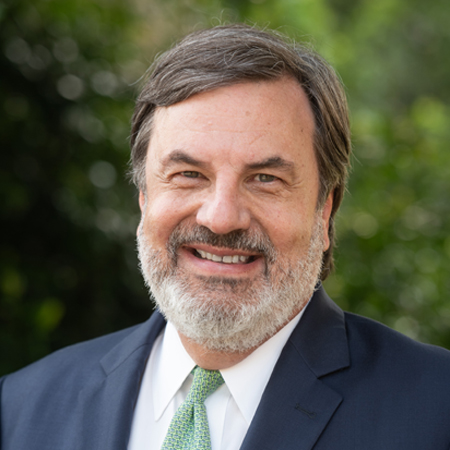
Our president Bob Fockler shares his perspective on public safety, collaboration, and community solutions in The Commercial Appeal.