
The long game
MICAH’s housing organizers have been watching, waiting, and building—for years. It’s starting to show.
For over 50 years, the Community Foundation has helped people give with purpose, strengthening Memphis and the Mid-South.
We make giving easier and more impactful by matching your generosity with the causes and community you care about most.
We offer solutions and resources to donors and the professionals who advise them to help you give smarter and do more good.
We offer funding opportunities that helps nonprofits and students create positive change and build futures.
When you get involved with the Community Foundation, you join a group of people committed to Memphis’s future.
Learn more about the philanthropic hub that connects capital with the solutions that make our community thrive.
MICAH’s housing organizers have been watching, waiting, and building—for years. It’s starting to show.
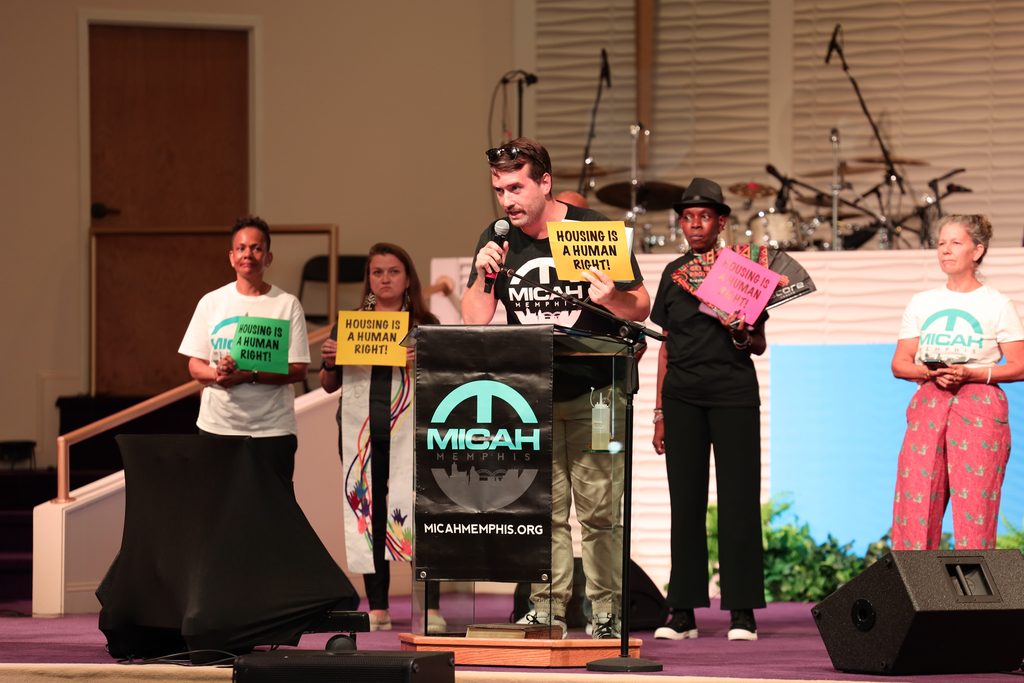
The news story wasn’t widely covered, and it happened so quickly you might have missed it.
Last summer, the appointed members of the city’s Health, Education and Housing Facility (HEHF) board did something rare: they revoked tax breaks called PILOTs, or payments in lieu of taxes, for two apartment complexes owned by an out-of-town landlord, after years of documented violations including collapsed ceilings, raw sewage, rat infestations, black mold, and a fire-damaged building left boarded up for more than a year. For the tenants living in those conditions, and for the housing organizers who had spent years watching and waiting, it mattered.
“ I’ve never had a harder time holding my poker face, I wanted to smile like an idiot,” said A.T. Harrison, a Rhodes College professor, housing expert, and MICAH task force member, when he heard the news. “I was like, man, that’s huge. And that’s just one campaign.”
Not that the PILOT changes had been quick, or even likely. Independent research found that between 2016 and 2023, nearly 20% of all evictions in Memphis came from PILOT properties despite those representing only 5% of the city’s housing units. And the board’s inspectors were conducting most of their oversight from outside: photographing parking lots and rooflines while conditions inside people’s homes went unscored.
MICAH task force members decided to focus on public housing PILOTs after the pandemic, reasoning that these complexes might be the last stop for a family before eviction and homelessness. They have been building coalitions with partners like the Memphis Tenants Union and others to empower and educate tenants, as well as watching the HEHF board meetings month after month, for nearly two years, learning how the institution operates and where it can be moved.
Jan Kidder, a former educator and MICAH task force member who has been part of the board-watching project, said it had taken that long to understand what was happening with PILOTs, much less how affordable housing developments are financed.
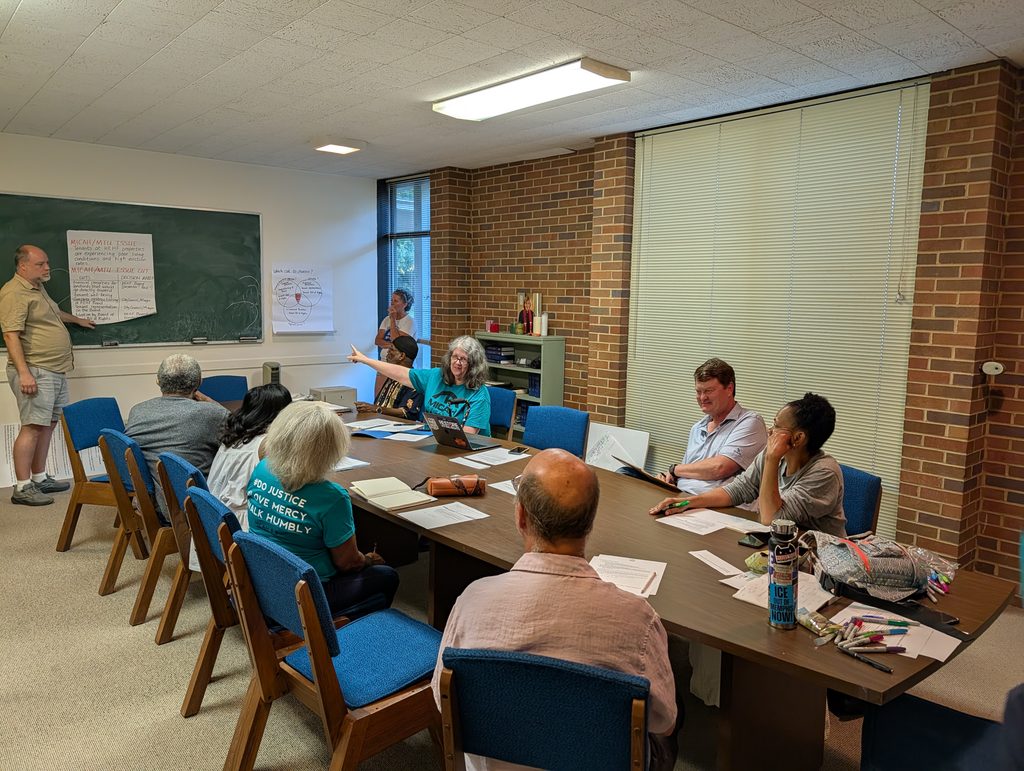
“ We’re not against PILOTs,” Kidder said. “We just want to know how they’re awarded and not.” In addition, the task force had a recent information-gathering session with a developer and a banker that helped a lot, though Kidder said the process for financing affordable housing is “incredibly convoluted.”
The MICAH task force’s work illustrates an important truth: changing inequitable systems is slow, painstaking work. Building coalitions, understanding the issues and relationships involved, working to engage stakeholders in developing their own solutions to problems—all of those long-term goals take time.
That kind of staying power requires the stability to plan over years, not grant cycles. The Community Foundation’s multi-year and unrestricted Reforming the Housing and Justice systems grants were designed to do exactly that.
For Kidder, a focus on housing justice came from work she did in the neighborhood surrounding her home parish, St. Patrick’s Catholic Church. “We mainly gave out emergency assistance for people who fell through the cracks at other places,” she said. “We made home visits and tried to befriend the people we served.” During those visits, Kidder saw what horrible conditions renters were living in and decided to get more involved, which led to her work with MICAH.
She still remembers meeting Ms. Bertha. “She was having terrible problems with her HVAC system, something about the venting; MLGW came out and said she was basically heating and cooling the whole neighborhood. Her bills were sky-high, and she’d contacted the landlord who did nothing. She contacted us for emergency assistance with her MLGW bills.
“ When we sat down with her, she was just so beaten down by these interactions with her landlord that she was just hopeless. We gave her some information about her rights as a tenant and told her about Memphis Area Legal Services. Mostly we encouraged her and prayed with her.”
“By the end of the hour we spent at her home, she had done a 180-degree turnaround. She said, ‘I’m going to contact that lawyer, I’m going to press for my rights.’ And she did.”
Kidder’s takeaway led directly to her work with MICAH: “It was so inspiring to me that care and concern helped more than the money.” A first step—and, for families still living in those apartments, not a small one.
Excerpted from the 2026 Community Foundation Annual Report.
Donate to the community-centered fund that responds to the Mid-South’s changing needs, guided by diverse voices and committed to shared progress.

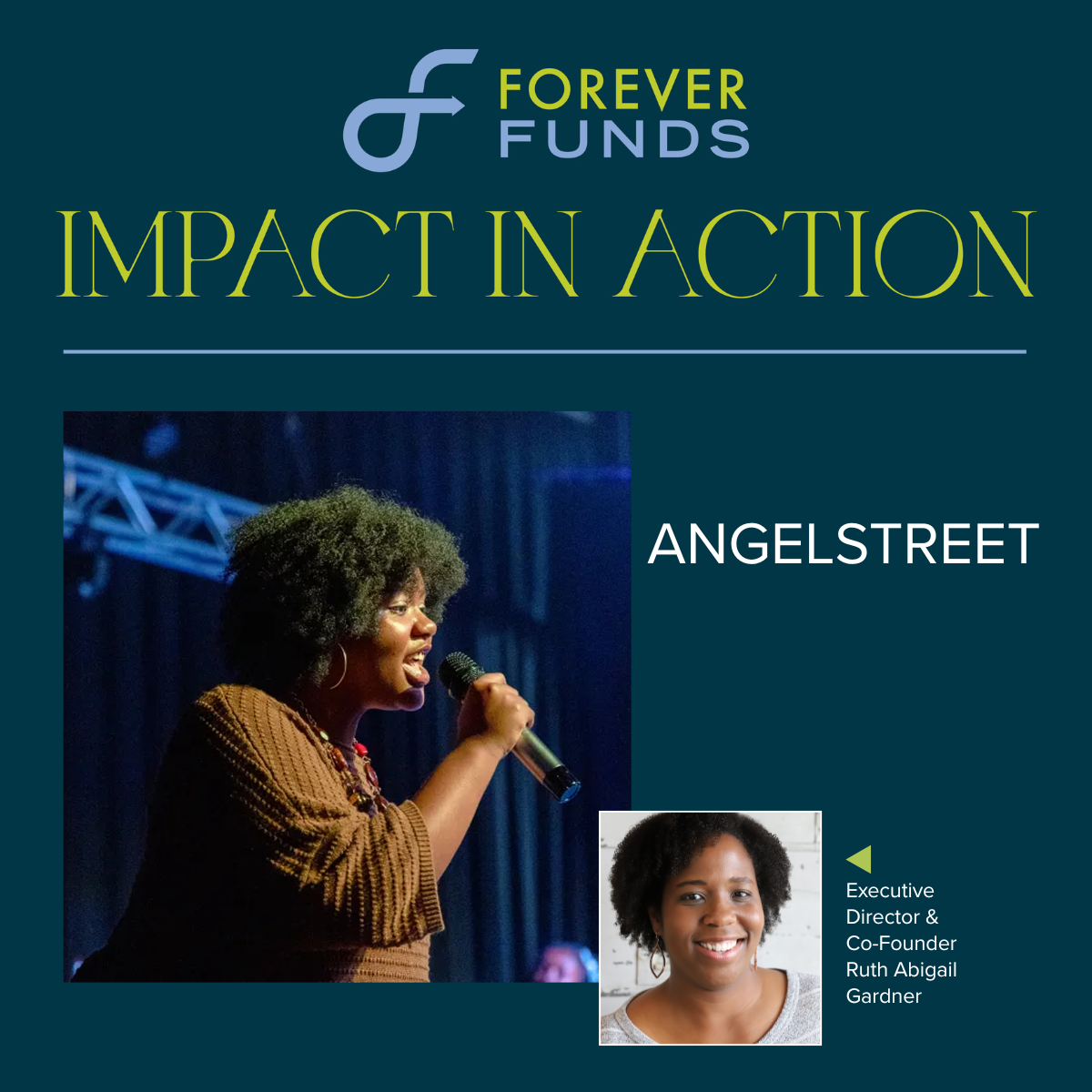
Responsive Grants grantee AngelStreet mentors girls in North Memphis through music, fostering confidence, courage, sisterhood, and leadership, helping young women discover their unique purpose—and their power.

New stakeholder perception reports highlight areas of strength, identify opportunities for improvement, and help reinforce priorities within our 2024-29 Strategic Plan.
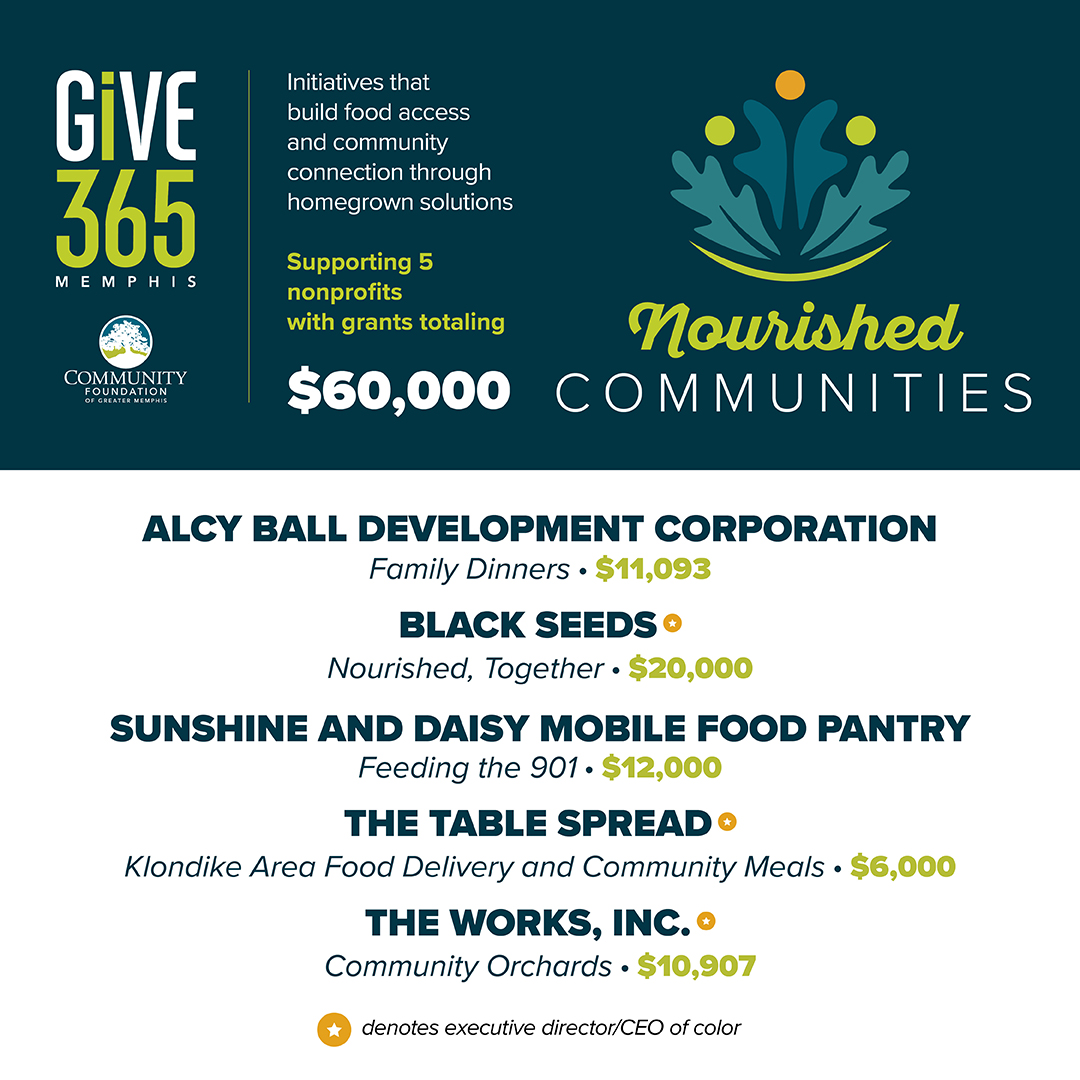
The members of GiVE 365, the Community Foundation’s dollar-a-day giving circle, announced five recipients of $60,000 in grants advancing the 2026 theme Nourished Communities.