Protecting your Wealth, Data and Peace of Mind
Vigilance, layered security, and asking for help are key defenses against cyber threats. Get takeaways from our recent event with Legacy Wealth Management.
For over 50 years, the Community Foundation has helped people give with purpose, strengthening Memphis and the Mid-South.
We make giving easier and more impactful by matching your generosity with the causes and community you care about most.
We offer solutions and resources to donors and the professionals who advise them to help you give smarter and do more good.
We offer funding opportunities that helps nonprofits and students create positive change and build futures.
When you get involved with the Community Foundation, you join a group of people committed to Memphis’s future.
Learn more about the philanthropic hub that connects capital with the solutions that make our community thrive.
Vigilance, layered security, and asking for help are key defenses against cyber threats. Get takeaways from our recent event with Legacy Wealth Management.
Cybercrime is now one of the fastest-growing threats to personal wealth—and it affects everyone. That was the resounding message from our recent cybersecurity panel featuring FBI special agent Joe Herman, Charles Schwab & Co. senior manager Page Adlington, and Duncan Miller, president & CEO of our event co-host Legacy Wealth Management. Their shared advice was simple: there is no shame in being targeted. In fact, the sooner you report suspicious activity, the more likely your financial institution, the FBI, or the Secret Service can recover your funds.
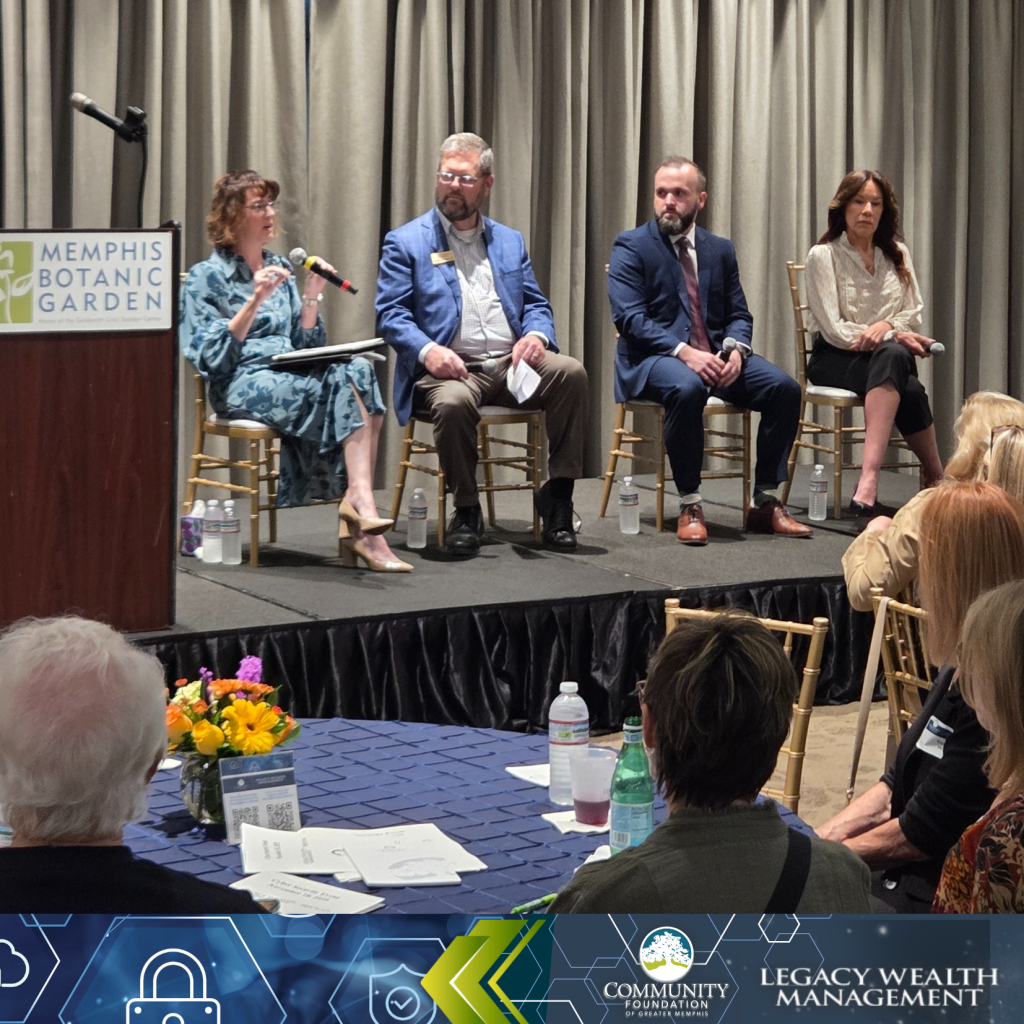
Email remains the greatest point of vulnerability. More than 99% of major financial breaches begin with a compromised inbox—often without the victim realizing it. Fraudsters insert themselves into real transactions, mirroring messages, altering instructions, and diverting payments, especially in home purchases and investment transfers. Text messages and calls are just as easily manipulated, with convincing impersonations of government agencies, financial institutions, and even loved ones.
The panel emphasized that cybercriminals prey on urgency and trust. They will use AI-generated voices, fake banking websites, romance schemes, or “grandchild emergencies” to push people into quick decisions. Strong passwords, secure devices, and a healthy dose of skepticism go a long way toward shutting the door.
Four ways to protect your data, wealth, and peace of mind:
Your vigilance, layered security, and willingness to ask for help remain your strongest defenses.
At the Community Foundation, we take the security of donors’ charitable funds and personal information seriously. Our systems are regularly reviewed and upgraded, and you will see additional security enhancements in 2026. If you ever have questions or concerns, please email Executive Vice President & COO Sutton Mora or call her at (901) 722-0054.

The possibility of a sustained down market can influence how clients think about giving. A case study highlights how you can help clients during uncertain times.

For clients transferring private foundations to a donor-advised fund, a thoughtful transition is essential to maintaining strong relationships and continued community impact.

As charitable planning becomes more nuanced, your clients are increasingly falling into two distinct groups who require a tailored approach.